The Five Pillars
FPC focuses on the core service areas that actually reduce operational risk.
Each pillar can stand alone, but the real value comes when they reinforce each other. Secure identity depends on cloud posture.
Recovery depends on documented systems. CMMC readiness depends on scope, evidence, operations, and disciplined follow-through.

1. Cybersecurity Protection
Protect the accounts, endpoints, email systems, and business workflows attackers usually target first.
This pillar focuses on practical controls that lower real-world risk without drowning the business in enterprise noise.
- MFA, identity hardening, and privileged access review
- Email security, endpoint posture, and incident readiness
- Risk-based remediation roadmaps and security baselines
- CMMC-aligned control awareness where contract work requires it

2. Cloud Solutions
Make cloud collaboration safer, cleaner, and easier to manage. FPC helps businesses get more value from platforms such as
Microsoft 365 and Google Workspace while tightening access, sharing, and administrative controls.
- Microsoft 365 and Google Workspace configuration review
- Cloud identity, group, and permission cleanup
- Secure collaboration, sharing, and admin governance
- Cloud readiness support for compliance-sensitive environments
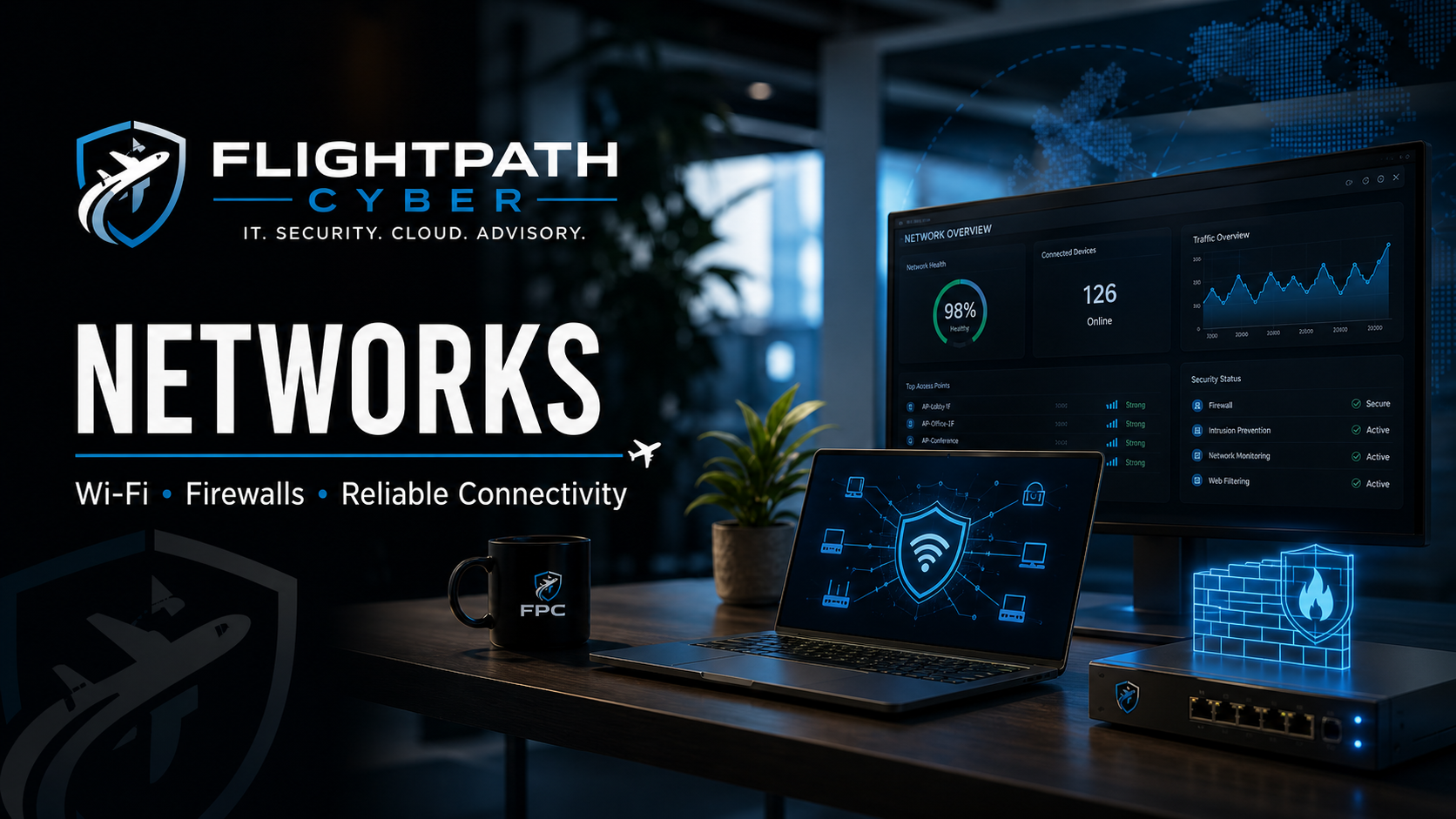
3. Networks
Reliable networks are the runway for the entire business. FPC helps improve firewalls, wireless, segmentation,
remote access, and visibility so the environment becomes easier to support and defend.
- Firewall posture, rule review, and segmentation planning
- Wireless reliability and small-office network cleanup
- Remote access and VPN posture review
- Network diagrams, baselines, and operational documentation
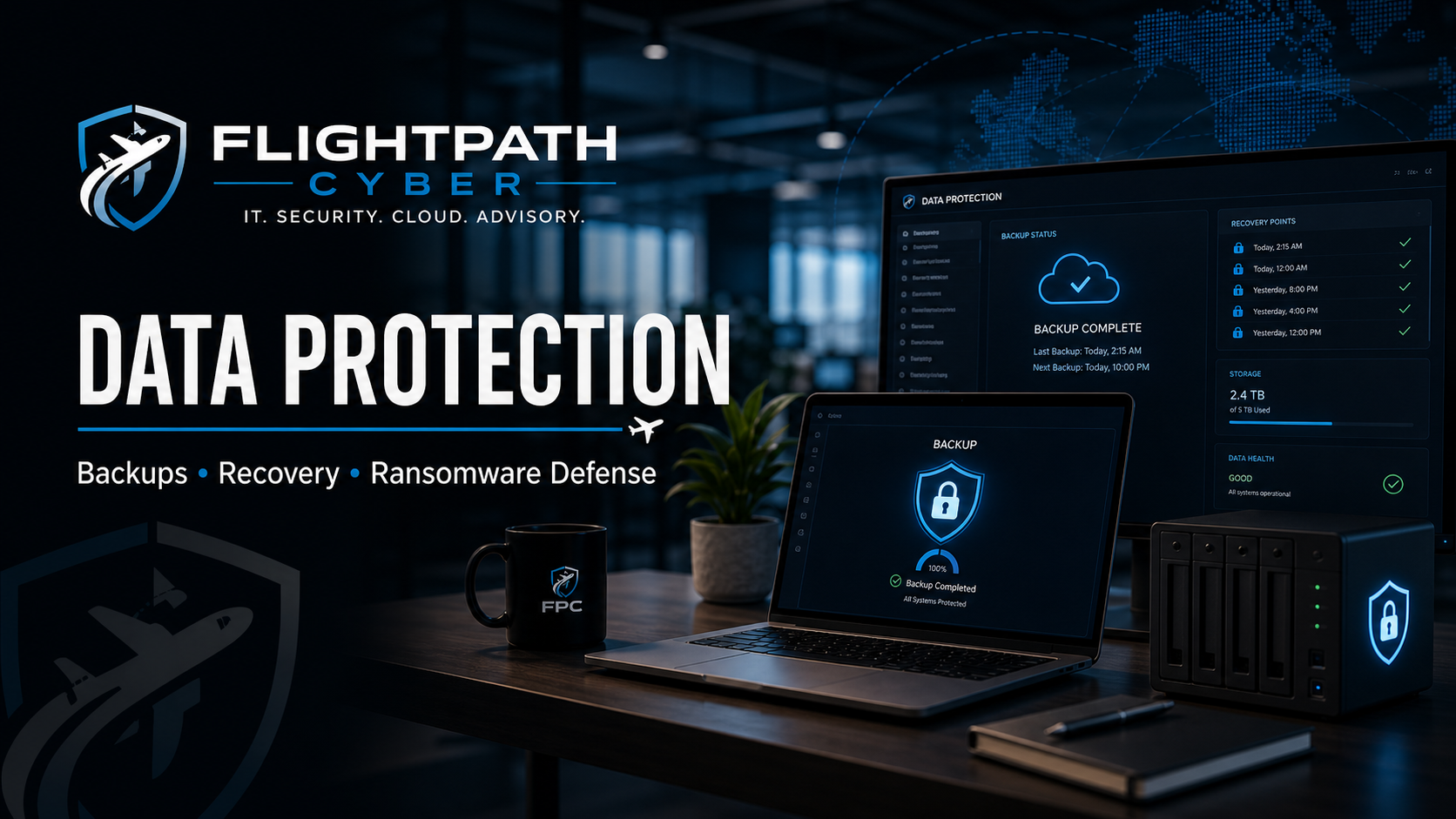
4. Backup and Recovery
Backups are only useful if they restore when the business is under pressure. This pillar focuses on recoverability,
continuity, ransomware resilience, and the documentation needed to execute during a bad day.
- Backup coverage review and restore validation
- Disaster recovery and business continuity planning
- Ransomware resilience and recovery priorities
- Recovery runbooks and ownership clarification
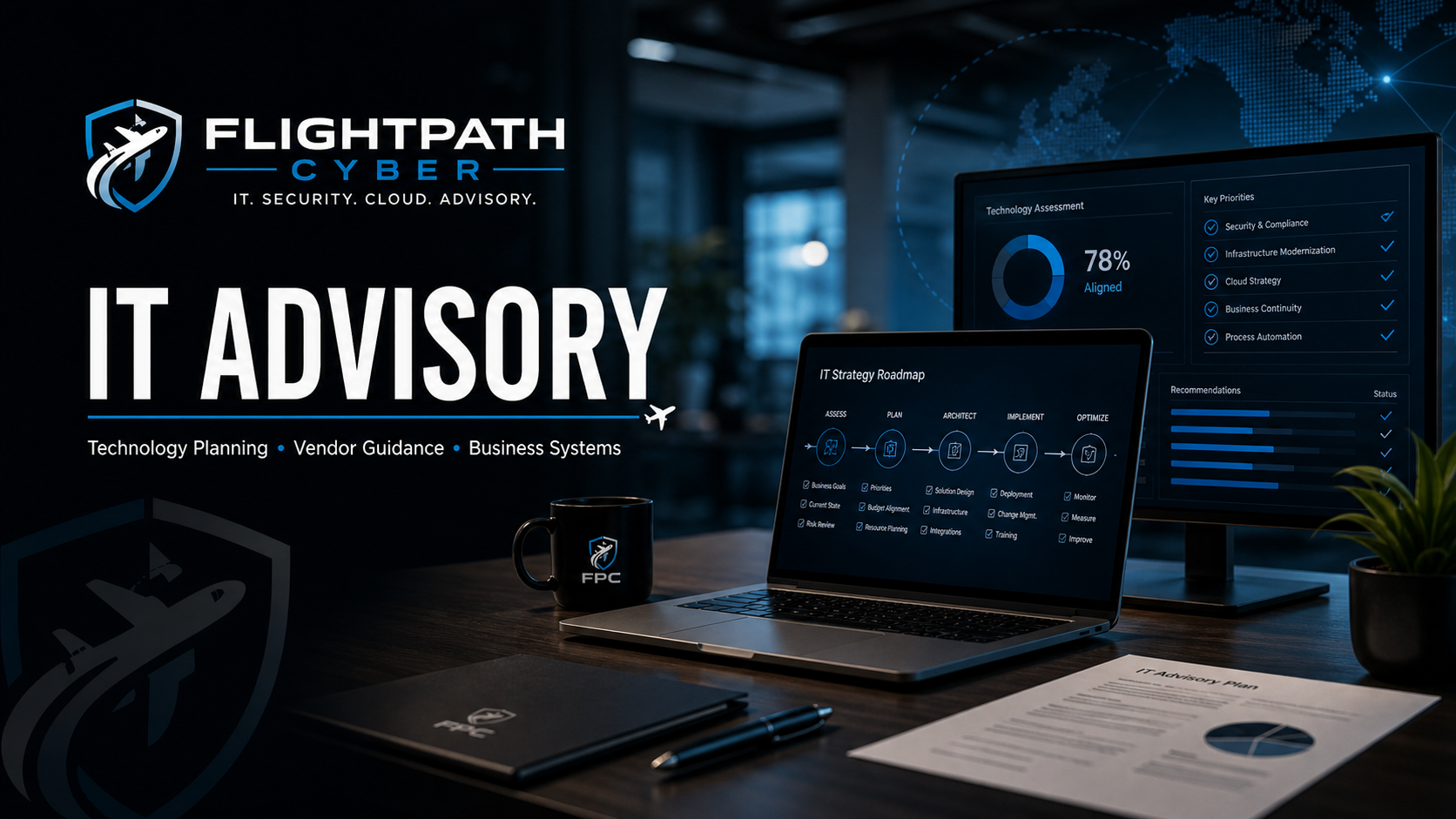
5. IT Advisory, Education and Training
Technology improvements fail when nobody owns them or understands them. FPC helps business leaders make better technology decisions,
sequence projects, train users, and translate cybersecurity requirements into plain-language action.
- Technology strategy, vendor review, and project sequencing
- Cybersecurity awareness and fundamentals training
- Executive-ready planning for budgets and risk decisions
- CMMC readiness guidance, survey review, SSP/POA&M support, and evidence preparation

How the Pillars Work Together
The five pillars are designed to converge into a clear operating picture: what systems matter, who owns them,
how they are protected, how they recover, and what evidence proves the work is being done.
- Cybersecurity defines the controls
- Cloud and networks define the operating environment
- Backup and recovery define survivability
- Advisory and training define execution discipline